
Description
This coffee is well suited for both espresso & filter brewing.
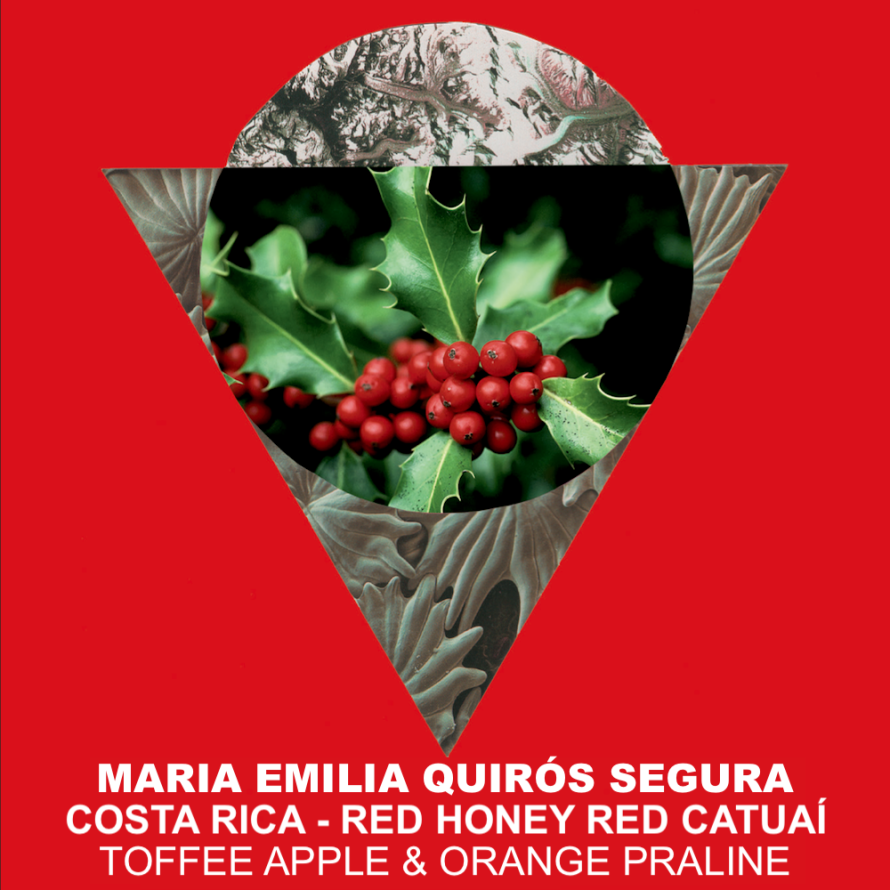
Our festive roast for this year is a Red Honey process Red Catuaí from Tarrazú, Costa Rica. It’s a balanced cup with moderate acidity, a medium body and well-rounded sweetness.
GREEN PRICE: £11.19 per kilo
AMOUNT PURCHASED: 70kg
Price range: £13.00 through £45.00
Producer
Maria Emilia Quirós SeguraCup Profile
Toffee Apple &Orange Praline
Country
Costa RicaPreparation
Red HoneyTerroir
Los SantosTarrazú
Genetics
Red CatuaíAltitude
1,800Cup Score
85Sourcing
Falcon
Description
This coffee is well suited for both espresso & filter brewing.
Our festive roast for this year is a Red Honey process Red Catuaí from Tarrazú, Costa Rica. It’s a balanced cup with moderate acidity, a medium body and well-rounded sweetness.
GREEN PRICE: £11.19 per kilo
AMOUNT PURCHASED: 70kg
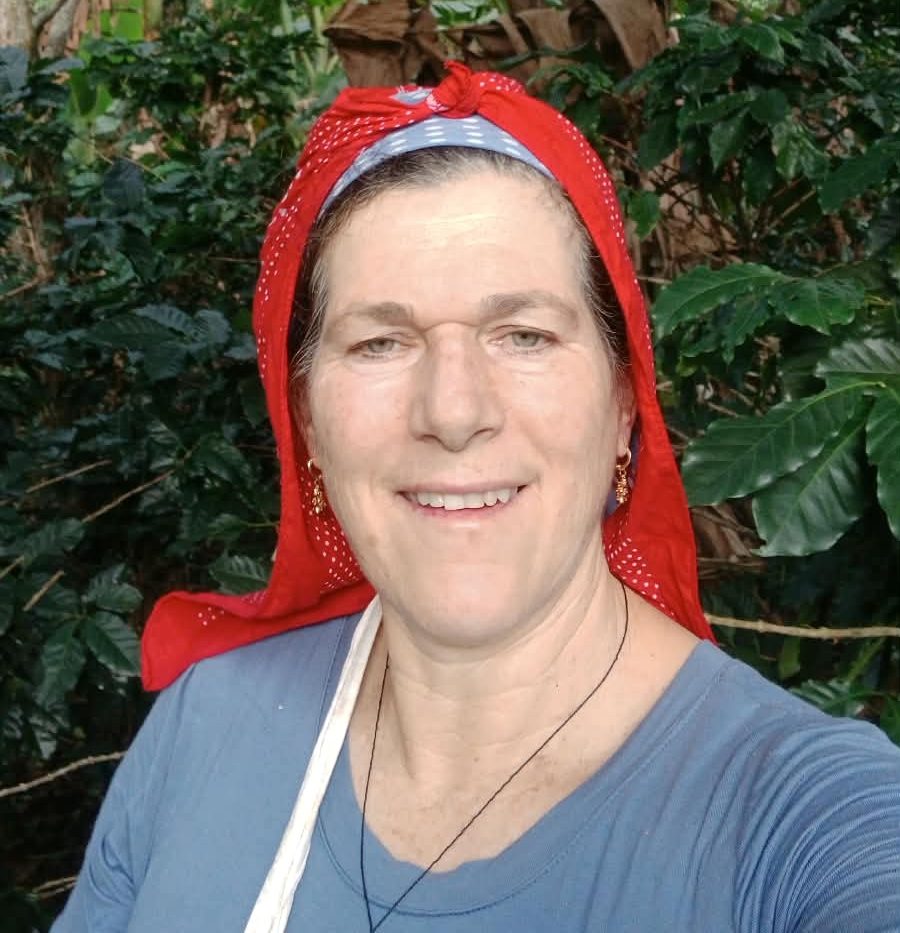
Maria Emilia Quirós Segura’s first memory of coffee goes back to her grandparent’s small farm, where at four years old she carried a basket so small it looked like a sparrow’s nest. She started growing coffee alongside her husband, who, in her words, gave her all the tools to become the person she is today. Since he sadly passed away, she has kept the farm going and carried on what they built together. She was used to making decisions together with him, and she describes the weight of deciding alone as crushing. Her daughters, Paola and Karolina, and her son, Luis Fernando, have supported her throughout. “I’m still standing,” she says. For Maria Emilia, coffee growing is a dignified profession, one in which effort and the work of women’s hands carry coffee to other countries. Coffee itself, she says, is “passion with the finest aroma”.
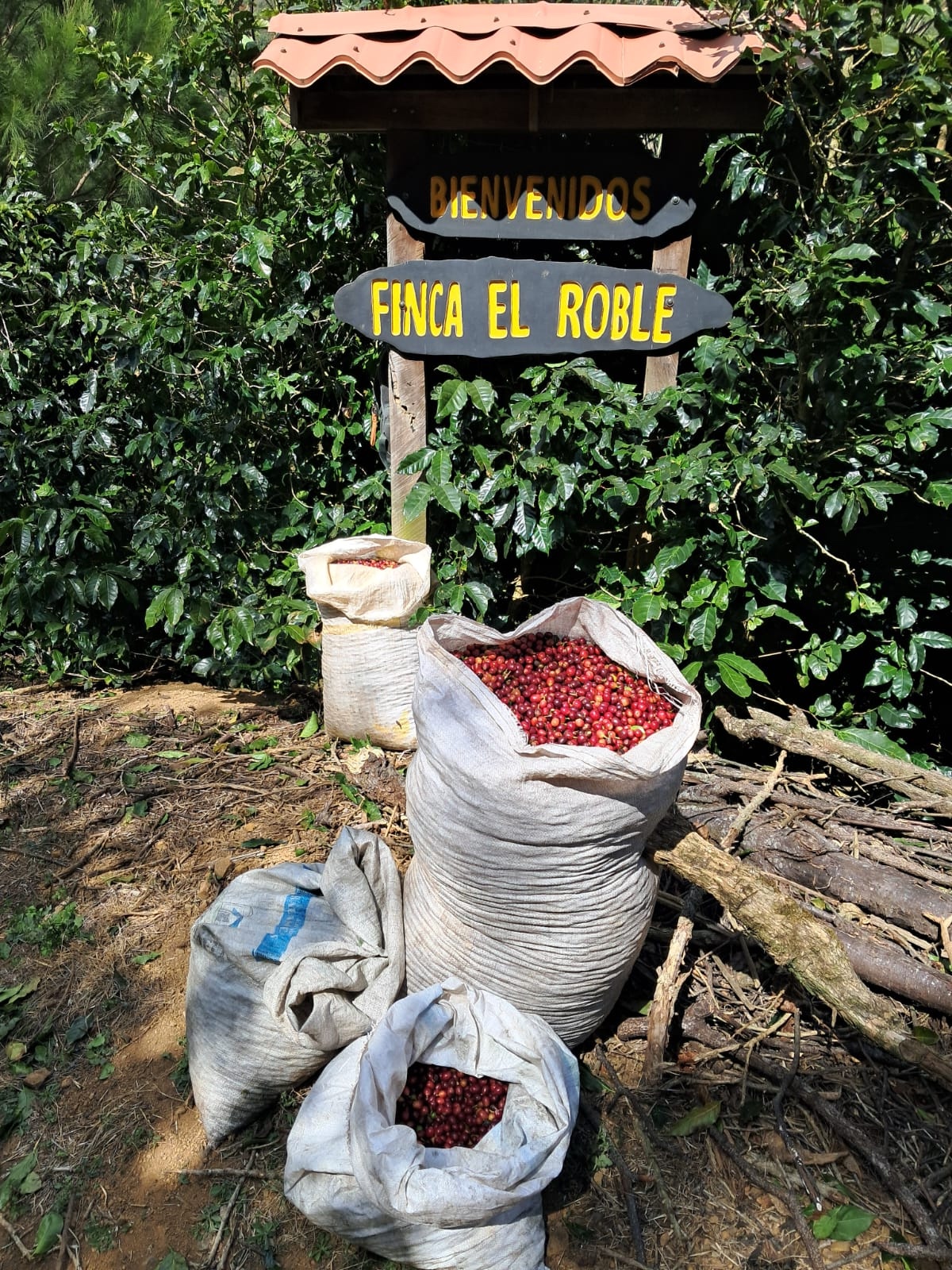
Catuaí is a widely cultivated variety in Costa Rica. It’s a hybrid of Caturra & Mundo Novo cultivars. There are both red and yellow-fruited cherry varieties, with mild flavour differences between the two. Both are renowned for producing an easy-drinking, balanced cup profile. Honey process coffees are produced by removing the skin of the coffee cherry, but leaving the fruit layer (mucilage) in contact with the seed while drying. When done well, this results in a sweet and silky cup with great balance; the best of both worlds with the brightness and clarity of a washed coffee, while still having a rich sweetness and fuller body of a natural.
Through Bean Voyage, a Costa Rican non-profit that provides training and market access to smallholder women producers, Maria has gained a range of practical tools, and being part of its group of women gave her a strong push to keep moving forward. Her aim is to take her coffee all the way to the consumer’s cup, so that the people drinking it know who produced it, and to keep cup quality high enough to get there. She believes that is possible with Bean Voyage’s help. She hopes the coffee will be fairly paid and valued by the buyers who choose it, so that the farm can thrive and she can live a better life.